


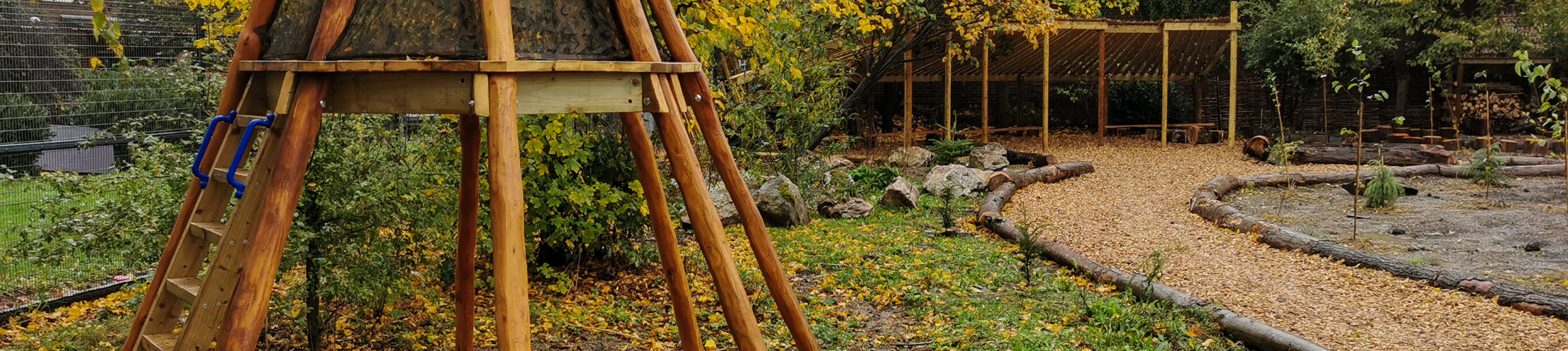
Siting the Forest School
The ideal environment will have some trees and other plants already established. Above all, these provide shade, shelter, ambiance and nature’s free gifts. If the area is a considerable distance from the actual buildings, then more time will be spent accessing the area. If the access route is over grass, then it may involve expense in making paths free of mud and winter wet. Schools need to factor this in, and/or consider other places where forest schools can take place. However, the easiest and cheapest way of accessing forest schools all year round is with protective clothing and footwear.
However, a good path has a multitude of benefits, both practical and social.
For all year-round access, we use an open foundation stone with a generous woodchip surface, all edged with durable hardwood coppice logs. Indeed, these materials are all home grown, recycled, reuseable and with no ‘end of life’ expense. Newly planted trees and bushes frame the path network, and these will grow and shade out the grasses. We use pioneer (fast growing) trees as a ‘nurse crop’ to nurture the slower growing trees of the woodland. Within 5 years the whole environment has character, inspiration, seasonal beauty. The woodchip surface breaks down over a 5-8 year period. This can be scrapped off, used as mulches around the establishing trees, and replaced. If not replaced, the foundation stone will continue to allow access in all but the most torrential downpours. The trees absorb rainfall and transform the area to allow easy access for most of the year.
You’ve arrived at the forest school! Now, what can we do to make the area more practical and user-friendly? See Forest School in a Nutshell 3 – coming very soon.